


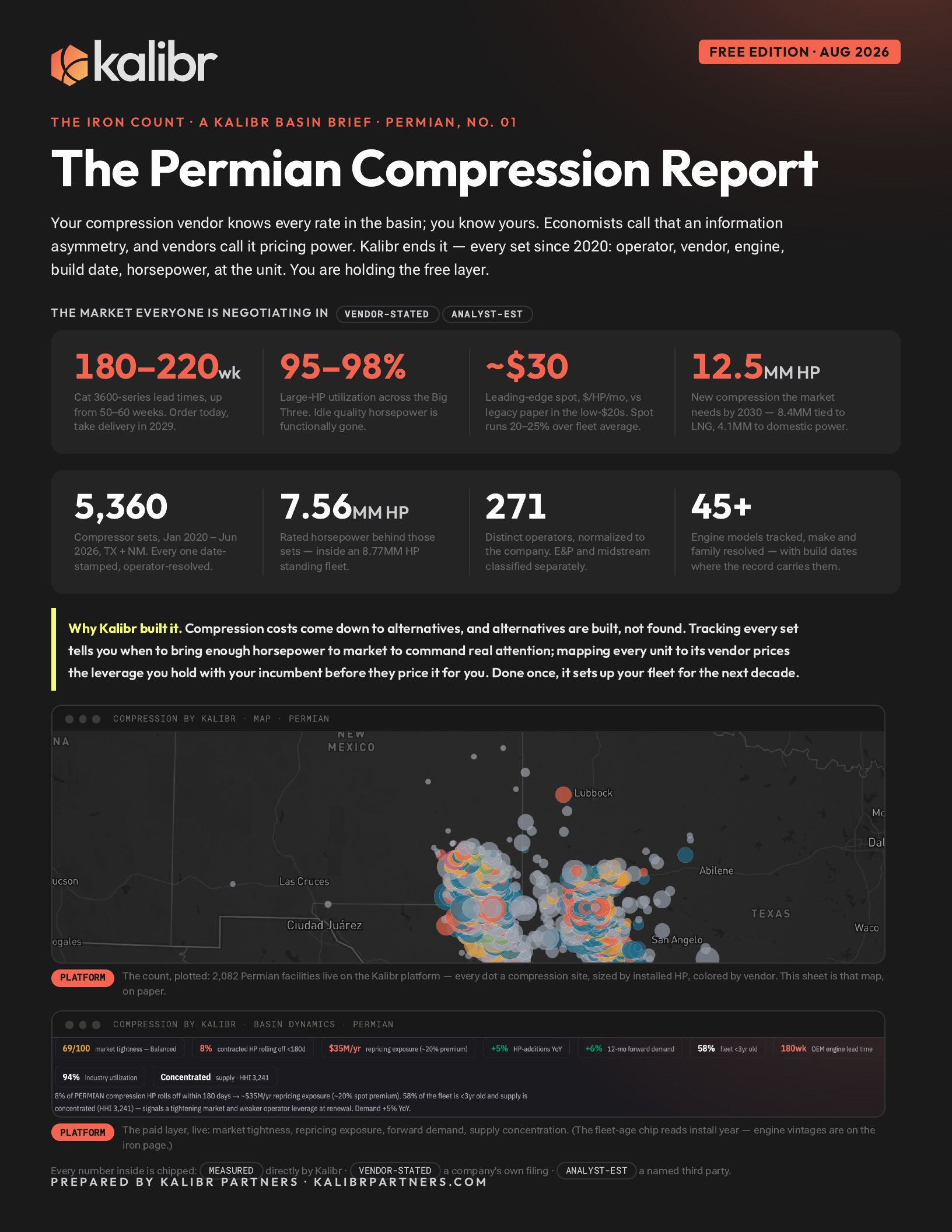
No customer filing in the Permian names a compression vendor. The 10-Ks say “third parties,” the vendors say utilization is functionally full, and everyone negotiates the gap between those two statements in the dark. We built the light switch: a unit-by-unit count of every compressor set in the basin since 2020, directly measured. Operator, vendor, engine model, engine build date, horsepower, at the unit.
This is the first Iron Count, a four-page brief of what six and a half years of that record holds for the Permian. All of it is free: the setting pace since 2020, who set iron in the first half of 2026, which engine families run the basin and how old that iron actually is, every major operator’s vendor book, and the midstream own-versus-rent spectrum, audited against SEC filings.
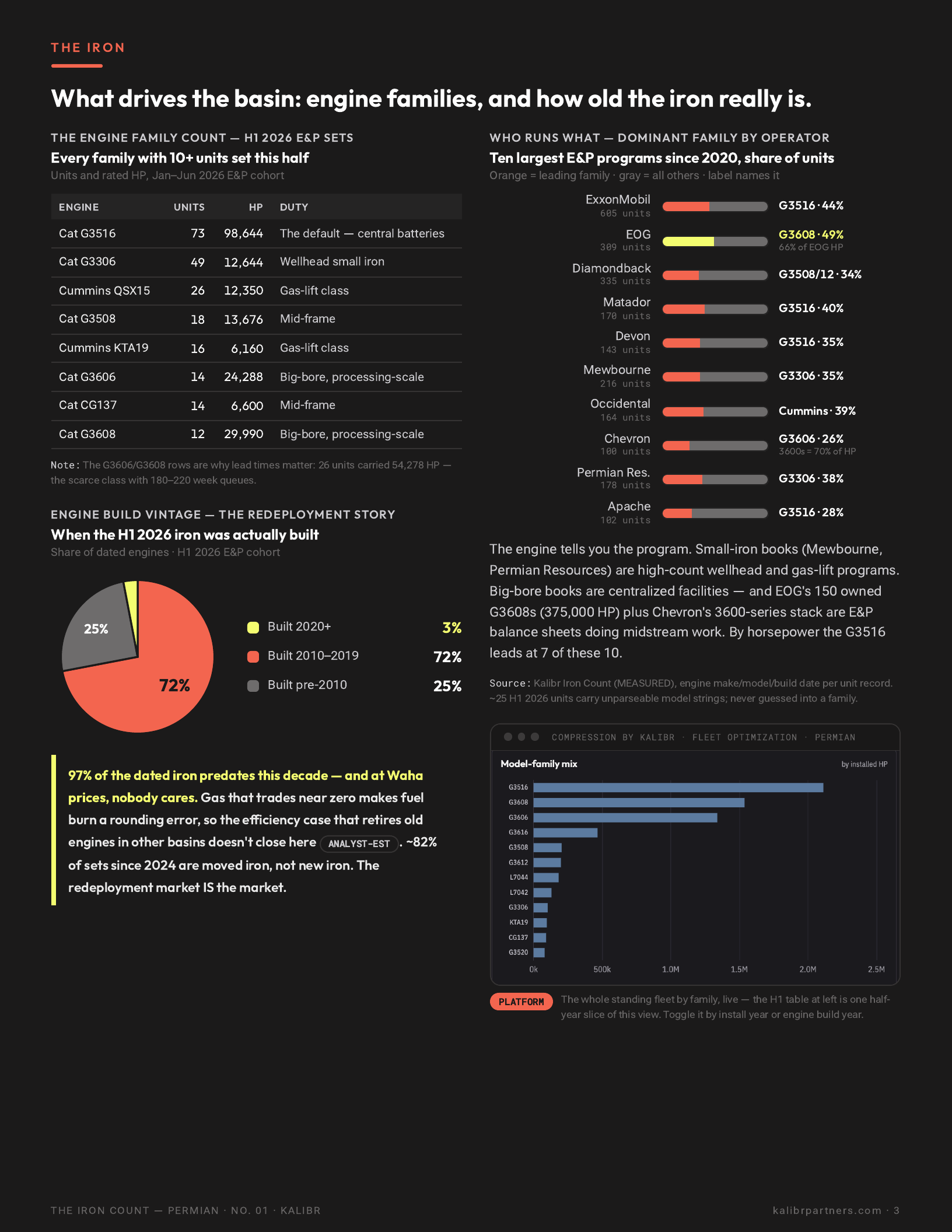
One number to set the tone: of the H1 2026 engines that carry a build date, 97% were built before 2020. When new iron takes 180-plus weeks to arrive, the market everyone actually trades in is redeployment. The count maps it, one unit at a time.
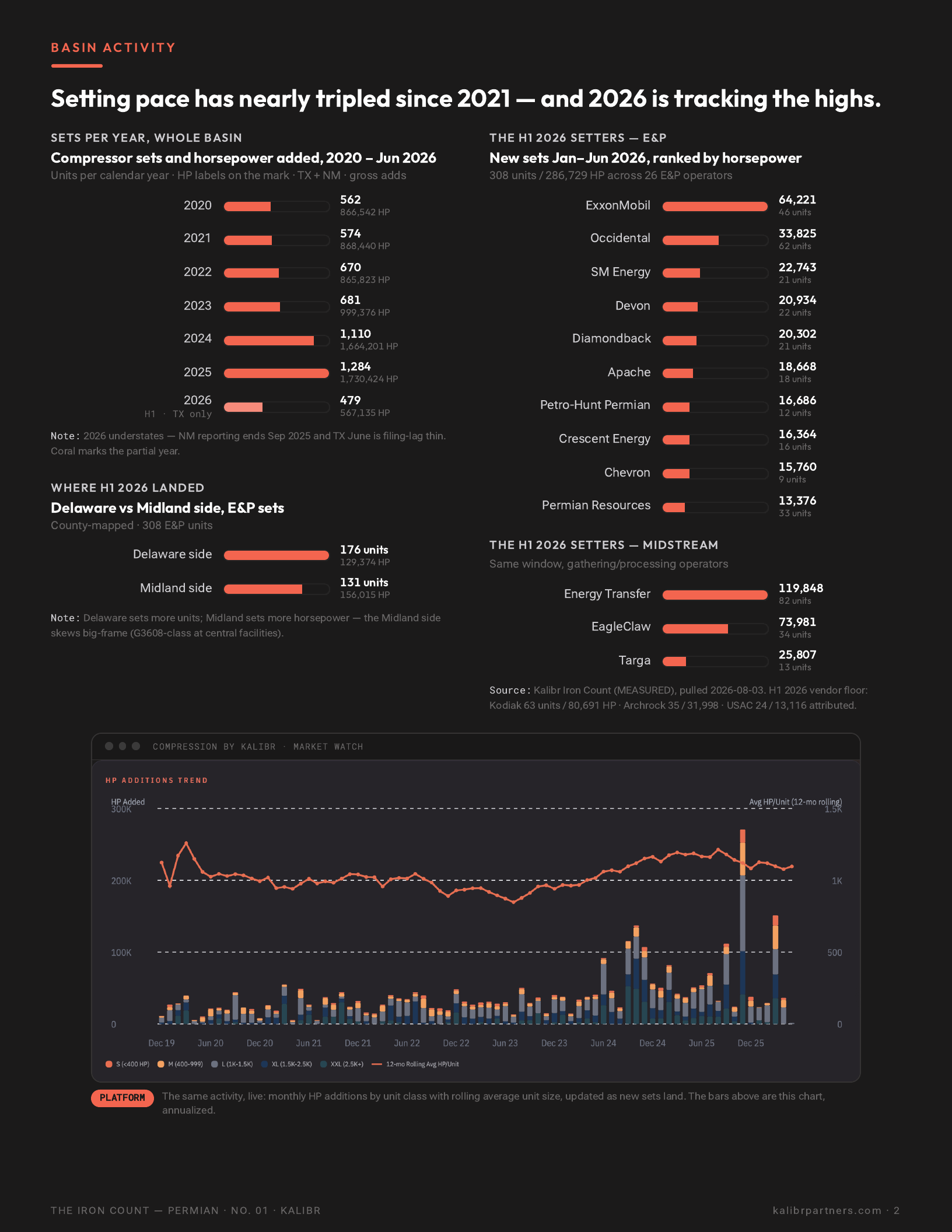
Setting pace has nearly tripled since 2021, and 2026 is tracking the highs. Who set the iron in H1: ExxonMobil leads the E&P table, Energy Transfer the midstream side, and the Delaware out-counts the Midland while the Midland out-horsepowers the Delaware.
What drives the basin: engine families, and how old the iron really is. The G3516 is the default, the big-bore 3600s are the scarce class, and the build-vintage pie is the page to argue with: 97% of the dated iron predates this decade. At Waha prices, nobody cares.
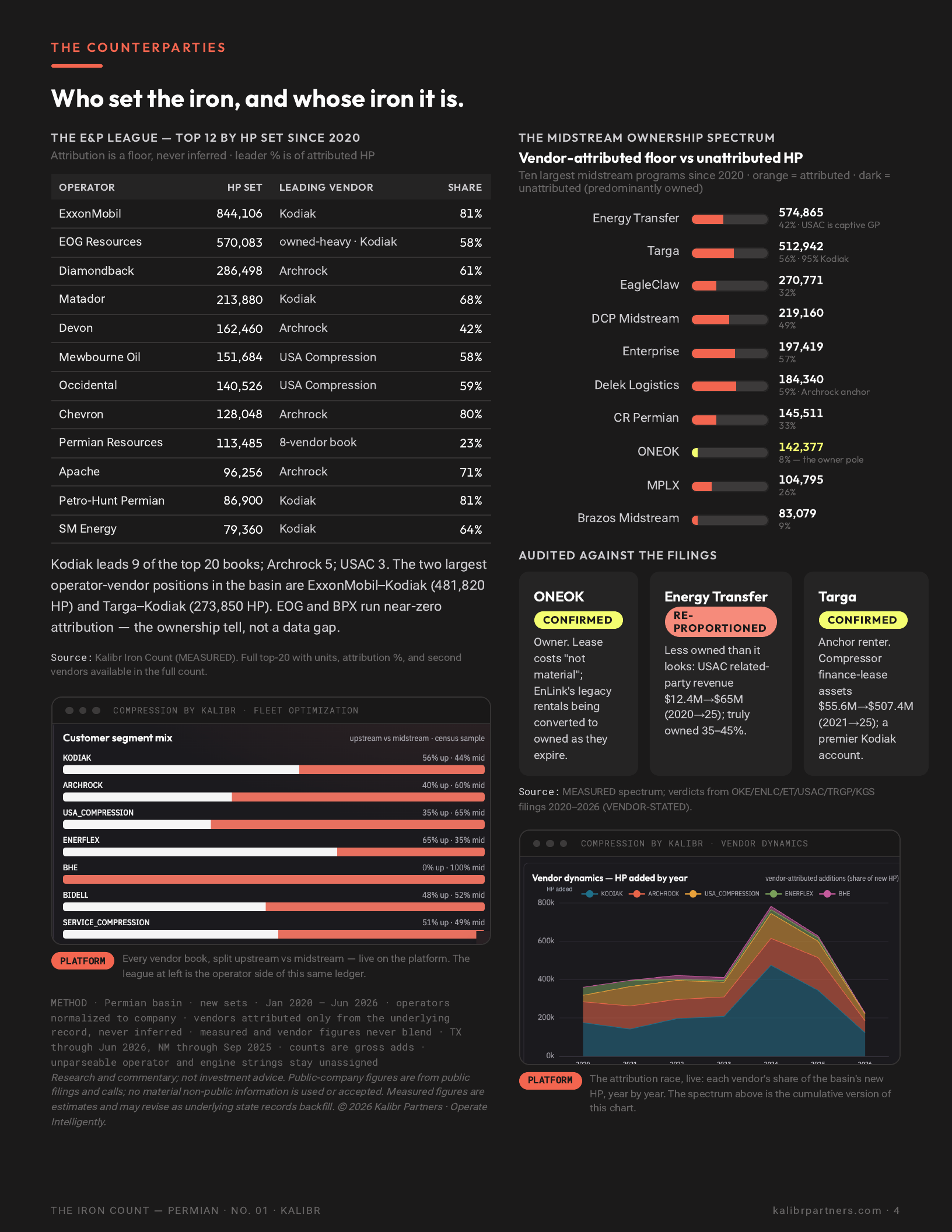
Who set the iron, and whose iron it is. Twelve E&P vendor books with the leading vendor named, the midstream own-versus-rent spectrum, and three ownership verdicts audited against the filings.
Message us with your work e-mail to get the PDF for your files, and it travels well: forward it to whoever negotiates your compression. The Iron Count covers a new basin every Wednesday, biggest first. Gulf Coast / Eagle Ford is next.