


The Golden Share and the BATNA Presidency
I’ve often said I love games. Not just board games (though Diplomacy deserves a corporate training comeback), but strategic frameworks. The kind John Von Neumann gave us while drafting Cold War strategies and reshaping negotiation theory. To describe my love for Game Theory in our common human language, memes, I am Wolverine holding a photo of Dr. Von Neumann.
Games help us understand leverage. They force us to isolate incentives, clarify outcomes, and identify the moment a good deal becomes a bad one. That’s why at Kalibr we live in the land of BATNA—Best Alternative to a Negotiated Agreement. It’s the core power metric in any negotiation.
And this week, we got a case study direct from the White House.
“Nippon Steel plans to complete its purchase of U.S. Steel after reaching an agreement with the Trump administration to resolve national-security concerns.
The Tokyo-based steelmaking giant beat out rival steelmakers in a bidding competition with a $14.1 billion offer in December 2023, but was blocked from completing the purchase by then President Joe Biden in January on national-security grounds.
The pact with the Trump administration includes an issuance of a so-called golden share to the U.S. government, giving it authority over the Pittsburgh-based steelmaker’s production and trade matters.” - Per WSJ
To push through Nippon Steel’s acquisition of U.S. Steel, the administration structured a rare governance mechanism: a “golden share" that grants the U.S. perpetual veto rights over key corporate decisions—plant closures, offshoring, material sourcing, etc.
Let’s be clear: this isn’t equity. There’s no capital at risk. It’s pure governance power. And it’s designed to last longer than the current administration.
From a game theory perspective, it’s brilliant—and entirely rational.
Trump’s BATNA—blocking the Nippon deal—was strong in the current environment, where his influence over regulatory bodies and trade posture remains high. Just ask Amazon. Whether by regulation or retaliation threat, his power to shape business decisions is being felt.
But that power isn’t permanent. Look back at his first term: several high-profile business decisions he publicly opposed went through anyway. GM plant closures. Cross-border deals. Reshoring failures. Presidential leverage declines with time and complexity. The BATNA weakens.
Which brings us to the football analogy: what do NFL GMs do when they have a star quarterback nearing the end of a rookie deal and heading toward max-market optionality? They lock them in. Trump just did the same. The golden share is his long-term contract—a way to preserve influence even as political control becomes uncertain.
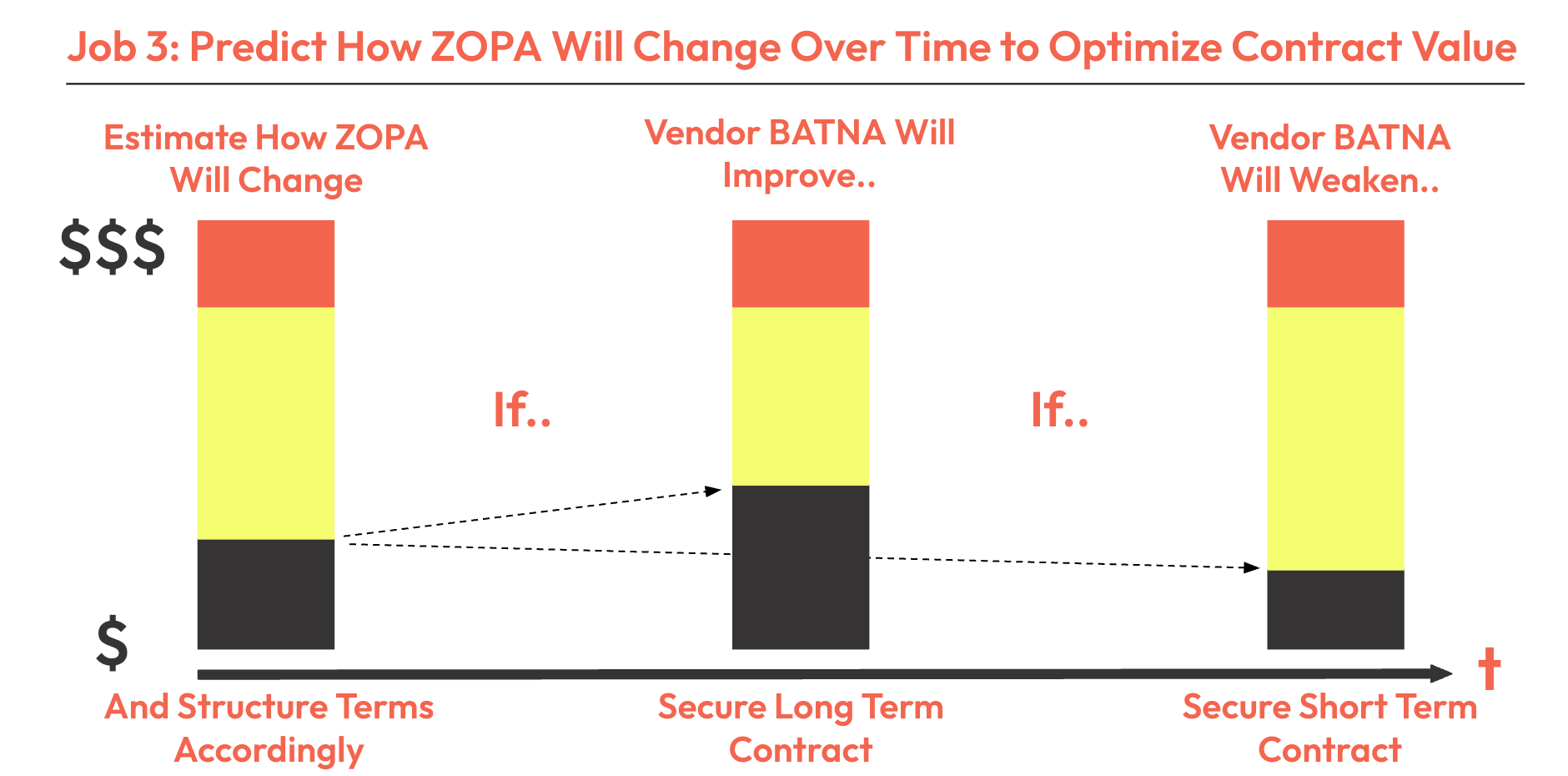
Now, future decisions at U.S. Steel—about layoffs, sourcing, offshoring—will require executive branch input. Even if it’s not “his” executive branch.—whether it’s a new president, a new Congress, or a new crisis.
We also have impacts on O&G.
Nippon inherits U.S. Steel’s Lone Star Tubular asset—significant OCTG production, Section 232 tariff-insulated, and geographically key to Haynesville and Permian players.
Competitors like Tenaris, Vallourec, and TMK now face a more globally-integrated, domestically-grounded challenger.
The golden share sets a “regulatory precedent”—expect future M&A to be shaped by similar arrangements. Industrial policy via shareholder proxy.
And if you’re budgeting for 2026 OCTG, we suggest updating your model inputs. The Kalibr OCTG Strength Index will track vendor leverage, but this move changed the game.
Your Career Has a BATNA Too
If this newsletter had a mission statement, it might be this:
Power dynamics explain everything—from billion-dollar steel deals to your own compensation review.
This week offered the paradox in our current labor market. We saw:
Chevron and other major industries continue cost-cutting
Meta buying a minority stake in a company just to get access to AI talent
And Amazon CEO Andy Jassy making explicit what employers have long hinted: the pendulum has swung back.
Companies are strengthening their BATNA. They’ve been doing it for years: scalable recruiting pipelines, remote policy levers, now AI-based decision agents. Meanwhile, individual leverage—especially in technical energy roles—is eroding.
Our typical personal negotiation advice advice?
1. Build a better BATNA: that means having other viable roles, freelance capital, or exit velocity.
2. Renegotiate when the employer’s BATNA is weak: post-exit, post-layoff, mid-acquisition, post-performance cycle. Timing beats tenure.
It’s a hard truth for many professionals. Renegotiating during your employer’s weak moment can feel disloyal—but corporate actors do this constantly. Flexible work, retention grants, total comp restructuring? All timed around internal constraints.
The next version of the oil & gas company might be a $50M PDP machine run by 5 people. Those five will not be interchangeable. They’ll be “interdisciplinary”. Think utility player: fluent in reservoir economics, capital planning, procurement—and AI workflows.
When talent is commodity, the edge becomes synthesis.
Japan Inc. Buys Gasland: Why Cost of Capital Is a Superpower
Mitsubishi is reportedly in talks to acquire Aethon Energy’s Haynesville assets for $8 billion. That follows Tokyo Gas’s $575M buy-in to Chevron’s position and Mitsui’s growing West Eagle Ford footprint.
What gives? Why are Japanese buyers devouring Haynesville acreage like it’s fiscal year-end in Tokyo?
The undercurrent here is finance 101 and the power of lower cost of capital:
Zero interest rates at home: Japan’s cost of capital is structurally lower.
Government backing: Entities like JOGMEC and JBIC underwrite energy security.
Diversified income statements: Mitsubishi isn’t a shale pure play. It’s a portfolio allocator.
Integrated value chains: These firms also “consume” the gas via utility subsidiaries.
U.S. buyers, on the other hand, are constrained:
Private equity demands double-digit IRRs.
Public E&Ps are returning capital, not deploying it.
Strategic buyers face short payback hurdles.
Japanese firms don’t need to overpay—they just win on cost of capital. They’re buying molecules, not exits. Which means deals that look rich to your spreadsheet may pencil easily to theirs.
It appears that we are just getting started? Five or six other international buyers are reportedly circling U.S. gas assets. The Haynesville may be the first basin to become fully geopoliticized.
What We’re Watching
Golden share governance: now formalized and perpetual. Will CFIUS use it again?
Aethon bidding war? ADNOC’s last-minute moves remain possible.
Workforce power shifts: AI, layoffs, and RTOs continue to reshape human capital BATNA.
If BATNA is a boardroom concept, this was a boardroom kind of week.
Until next time—stay hedged.
—Ian