


TL;DR
Here is a strange fact about the oil business: it is staffed by the best professional uncertainty managers in American industry, and they refuse to use the skill where it is easiest. An E&P company prices a reservoir it will never see through an 8.5-inch hole covering one seventy-millionth of the map, stamps an engineer’s probability distribution on it, and borrows against it. It runs a desk that decides, daily, whether to lock or float the price of the thing it sells. Then it walks to the cost side of its own ledger, where the counterparties publish rates, utilization, and cost structures in SEC filings, and pays the posted price.
Which brings us to August 5, when Archrock signed the largest compression services agreement on record: 665,000 horsepower, eight years, price undisclosed, at the top of the cycle. Was eight years brilliant or expensive? Nobody at the table can say out loud, because the industry has no system for pricing term (IMO it was smart for AROC, but I digress).
That is what this series builds. A contract’s rate is a snapshot; its length is a forecast. Both parties’ walk-aways (yours is the full cost of the status quo, theirs is the next-best table in the basin) are set by inputs that print: utilization, engine queues, gas-oil ratios, fund clocks. So you can simulate both positions forward against the curves and answer the two questions every term sheet asks. Go long or go short? And what do you charge for the years? Lock long when your counterparty’s alternatives are compounding. Sign short when their floor is about to sag. And when you grant duration, price it, because revenue certainty is the most valuable thing this industry trades and it currently changes hands for free.
Part one (Today) builds a simplified framework (not the one we run at Kalibr, but something still relevant). Sunday’s piece, free preview, turns it into the simulation.
Suppose you are in the business of selling a widget. The widget is ordinary. The interesting part is the machine that makes it, because the machine is a sealed box: it came sealed, it stays sealed, and nobody will sell you the manual. You will run this machine for forty years and never once see inside it.
You do get data. A little. You can push a probe through the shell and measure whatever the probe touches, and you should run the arithmetic on how much that is: an 8.5-inch hole in a 640-acre section covers about one seventy-millionth of the map. You pay very smart people to take those pinpricks and draw the whole interior, and their maps are the best anyone can draw, and they are still maps of a thing nobody has seen. Your competitors run the same kind of box, and what comes out of theirs is public, so you fit distributions to their output. The physics of boxes as a class is a whole literature, and you read it. After all of that, you still don’t know what’s in yours.
While you work the puzzle you hold exactly two levers: what you feed the machine, and how well you run it. Both show up in the quality of your widget; neither tells you what’s inside. Somewhere around year ten of this you stop being a manufacturer in any meaningful sense. You sell widgets, but the craft you’re compounding is pricing what you can’t see. Your investors figured that out before you did, which is why they charge you more for capital than they charge the man down the road who buys machines with spec sheets and rents them out: a lease schedule is a document a lender can read, and your reserve report is a probability distribution with an engineer’s stamp on it.
And the craft travels. Your widget trades in an open market, so you stand up a desk whose entire job is one daily decision, lock or float, made against a forward curve. Your neighbor runs the same boxes with less discipline, so you buy the neighbor, on the theory that you price his uncertainty better than he does. The craft runs through the hedge book, the acquisition model, the borrowing base. Decades of compounded practice at a single skill: decisions under uncertainty, made for money, graded quarterly.
(You recognized this business a few paragraphs ago. The sealed box has an API number. Stay with the widget a minute longer anyway.)
Now walk to the other side of your ledger. Everything you feed the box, steel, sand, horsepower, chemicals, electricity, you buy from companies that are the transparent version of you. The feedstocks trade daily. The machines come with spec sheets and performance curves. A striking number of the companies sending you those invoices file quarterly, with rates and utilization sitting in the tables and their cost structures spelled out over a CFO’s signature. This is the same lock-or-float problem you built a trading floor to solve, played with the cards face up, and by any theory of decision-making you should be deadlier here than anywhere else in your business. Study the seller, build the distribution, decide: lock it in contract, or let it ride.
Except you don’t. Almost nobody does, and the exceptions are mostly accidents. The material runs down, somebody notices, and the company goes back to the market to ask what things cost now. The best uncertainty managers in American industry, seated for once at a table where they can see the deck, decline to play a hand. They pay the posted price and walk back into the dark room. Your company staffs a floor of people who decide daily whether to lock or float the price of the thing you sell; nobody at your company, or at any company you compete with, holds that job on the cost side. Call it corporate cognitive dissonance. Everybody shrugs and moves on, and for most of my career that included me.
What broke the shrug for me was management consulting, of all places: years of negotiation work, most of it nowhere near oil and gas. Strip any negotiation to the studs and what’s left is optionality, yours against your counterparty’s, with the deal living in the spread between them. Optionality moves over time, on both sides of the table, and the things that move it are mostly market indices, and indices carry futures curves. Which means you can model the whole thing: how your options and theirs are set to shift, where the price is likely headed, and whether today is a day to lock or a day to let it ride.
The Sellers Picked Lock Ten Years Ago
You can judge what that model would be worth by watching the people who already run one. They sit on the other side of your invoices. The defining commercial project of oilfield services over the past decade has been the conversion of spot revenue into contract revenue, everywhere the sellers could manage it. The frac companies moved the top of the market onto dedicated multi-year e-fleet agreements and left spot pricing to collapse on whoever remained; Halliburton will not build a Zeus fleet without a firm contract in hand. The drillers put their high-spec rigs on term, and Helmerich & Payne now runs 50% of its US fleet on performance contracts. SLB grew a digital segment to $1.04 billion of annual recurring revenue, a phrase nobody said on a location in 2014. Compression vendors now announce contracts long enough to need their own credit committees. The selling half of this industry looked at lock-or-float and picked lock, as a strategy, ten years ago.
The push makes perfect sense. For a sector that spent most of its life selling on callout, a contract delivers the one lever of value a service company cannot manufacture internally: revenue certainty. A contractor can cut costs and high-grade the fleet, and neither tells the lender what 2027 looks like. A signed term does. Certainty is why contracted businesses borrow cheaper, screen better, and trade at multiples the spot players can only stare at.
The reason vendors could not always get it is that operators could not credibly give it. Revenue certainty is worth what the promise behind it is worth, and for most of shale’s life the promise was volatile: thousands of operators, every capital structure imaginable, every possible sensitivity to activity. A D&C budget running on a small DJ Basin asset base with a private equity clock behind it is a fundamentally more volatile object than ExxonMobil’s Permian program; one re-plans quarterly, the other publishes a five-year plan and hits it (hitting it is the novelty). A vendor underwriting term against the first is pricing a promise that evaporates at $55 crude. Consolidation took most of that variability out of the buyer base. The companies buying oilfield services today are, to a degree the industry has never seen before, large organizations with durable balance sheets and capital plans that are boring on purpose. The buyers are finally certain enough to be worth contracting with, and the sellers noticed first.
(A side bet, for another issue: as Tier 1 inventory depletes, I expect the next consolidation rounds to be larger, because the prize shifts to whoever can develop Tier 2-ish acreage at an economic advantage, and scale is most of that advantage. The variable is Washington. The current FTC waves large energy deals through at a pace that would have been unthinkable a decade ago, and that disposition is on the ballot in 2028. Something to keep an eye on.)
Structure says term is now possible. The cycle says it is now urgent, and I spent a full issue earlier this year on why. The short version: in drilling, where casing is the largest single cost category, the squeeze is regulatory, Section 232 tariff walls doing the entry-deterrence work the domestic mills would otherwise have had to pay for themselves (a subsidy nobody has to book as one). In completions, the squeeze is a market decision, capacity retired on purpose by the frac companies that own it. In compression, the squeeze came through the supply chain, a Caterpillar engine queue that set a hard ceiling under every vendor’s build plan and repriced the installed base behind it. Three mechanisms, one result: the seller across the table holds more pricing power than at any point in the shale era, and when that is true, the length and structure of a contract stops being paperwork and starts being the whole trade.
Casing is where I put this to work at the start of the year. Through January I banged the drum with clients to lock term on production casing, on reasoning that fit in a sentence: the tariff regime handed domestic mills pricing power, and pricing power that exists gets exerted. Our model runs the demand side by buying power, every operator placed on a surface with volume on one axis and conviction on the other, coupled to a forward supply side built from trade flows, scrap pricing, and mill utilization, and in January the output was not subtle about direction. The recommendation went out mid-month: take term on seamless production strings while the leverage still sat with the buyer.
But lock is only half of the decision. The other half is what you write the contract to, and it is where buyers hand back what they just won. The standard move is to index the term price to Pipe Logix. Pipe Logix deserves a closer read: Argus assembles it monthly from surveys of US distributors, and describes the assessments, in its own product literature, as averages of distributor spot prices. The largest casing supplier in the country, meanwhile, spent the past decade building Rig Direct precisely so its pipe never crosses a distributor’s yard: mill to well, no intermediary, 16% of Tenaris’s global shipments in 2014 and, by the CEO’s own count, 90% of what it sells in the United States today. The biggest seller’s transaction prices are structurally absent from the survey. Argus then markets the product for exactly the use we are discussing: the monthly percent change in the all-items average, it says, is applied to long-term price contracts. A voluntary survey of the spot channel, missing the market’s largest seller, sold as the escalator for term agreements. The methodology has the aesthetic of rigor. What it measures is what people who buy on spot are paying.
And what you handed over to get that term price was the expensive part. Revenue certainty is the most sacred gift in this space; it is the thing the entire service sector has spent ten years trying to buy. If you grant it, your price should not float on a survey of what the uncommitted pay in a channel your counterparty barely touches. It should track the feedstocks of your counterparty’s cost, because that is the version that keeps the spirit of the agreement intact: you carry no exposure to the spot market you just left, and they carry no margin risk on the costs they bear. In casing, that means published, auditable series, busheling scrap and hot-rolled coil, or the seller’s own realized prices pulled from its filings, symmetric in both directions, collared, moving on a quarterly trigger. When we swapped a mill’s referential formula for a mechanism like that this year, the argument about the level ended, because there was nothing left to argue about: either the cost basis moved or it did not.
All of which explains why my ears perked up on August 5, when Archrock disclosed the largest compression services agreement in our coverage’s history: approximately 665,000 horsepower for midstream applications, an 8-year base term with a 2-year extension option in the customer’s hands, roughly 15% of the operating fleet committed in one signature, at a price management would not discuss. Two things struck me as peculiar. First, the length crosses a line our own arithmetic draws, in a vertical whose standard agreement ran 6 to 36 months a decade ago and 3 to 5 years today. The fully loaded payback on buying new compression rather than renting it runs 6 to 7 years, and a midstream counterparty, whose installations never move, is precisely the buyer for whom that payback case works best; the customer with the strongest ownership case in the market just chose to rent for eight years. Second, the vintage: the lock landed with rates at records, Caterpillar quoting 195 weeks on the big engines, and a new bidder for those same engines that has nothing to do with moving gas, the data-center build (why that matters is coming shortly).
To be clear, I am not arguing the customer got it wrong. There is a price that makes eight years the right trade, and I am led to believe the pricing made the term worth it, partly because nobody signs a contract like that without being paid for the duration somewhere in the deal, and partly because the number stayed undisclosed. There are also motives that live outside the pricing fold entirely, and a fair evaluation has to hold them; guaranteed availability in a 195-week world is a real asset on its own. What the deal illuminates is a gap. When the largest contract in an industry’s history gets signed at the top of that industry’s cycle, and the market’s collective response is a shrug about terms nobody can see, the tools for evaluating these decisions are thinner than the decisions deserve. Duration is the most valuable thing either side of this table trades, and neither side prices it out loud. So let’s build the tool. The raw material is game theory, and the first piece is a framework we can hang every one of these decisions on. You have run it at least once yourself, the last time somebody tried to hire you away.
The Last Time Somebody Tried to Hire You
Employment negotiations are my go-to example for the game theory behind contract pricing, partly because everyone has run one, and partly because I have spent years as an unpaid consigliere to them (I handled more or less every salary negotiation in my MBA class, a service I offered for free and that paid me back in data).
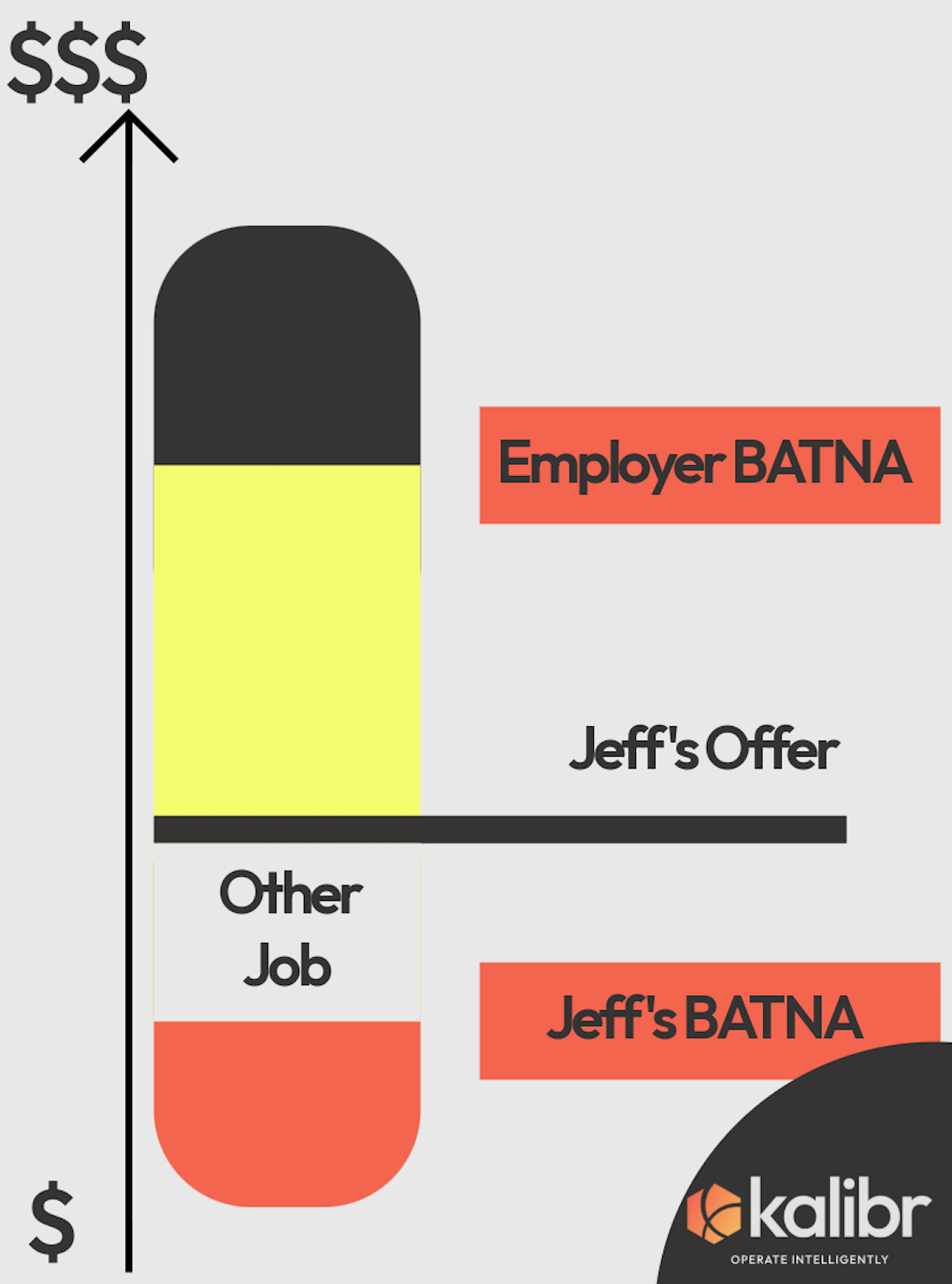
So, an actual case study. My friend Jeff is an executive at a large insurance company. The SVP who ran a parallel group resigned, and the company asked Jeff to absorb that group into his. More scope, more people, more revenue under his name: a thing worth negotiating for. Jeff’s opening move was the one everybody’s uncle recommends. He interviewed at a rival, landed a better offer, and prepared to set it on his boss’s desk and ask for a match.
This is where I got involved, mostly to say: don’t.
The match-the-offer play has two problems, one visible and one hiding in plain sight. The visible one is that it leaves Jeff nowhere to go. An outside offer is a published walk-away. If the company declines to match it, then by the arithmetic Jeff himself introduced, staying is now worth less than leaving, and any rational economic actor has to take the outside job (Jeff, who likes his job, would then get to choose between leaving a job he likes and demonstrating that his walk-away was a bluff, which is worse than never negotiating at all).
The hidden problem is better, because it is hiding on the other side of the desk. Sit in the employer’s chair and price their alternatives if Jeff declines. They recruit a replacement SVP, and market data prices that seat. They pay a premium to pull a sitting executive out of a chair they already like; call it 20% on top. Then the second-order effects, each one estimable: what revenue slips during a three-month search? Does the leadership vacuum cause attrition in the ranks below, and what does backfilling those seats cost? None of this is soft. You can put a dollar figure on the employer’s next-best alternative, and it sits far, far above Jeff’s outside offer.
Which is the punchline: there is a wide band of dollar figures above Jeff’s offer and below the employer’s replacement cost where neither party holds an economically better alternative than saying yes. Reasonable people can argue about the band’s edges (estimates are estimates), but its existence is arithmetic, and Jeff’s match-me strategy was a plan to settle at the absolute bottom of it, voluntarily, while feeling clever.
There is, thankfully, an entire discipline of economics that governs this dynamic. Theories build a framework; a framework becomes a process; and a process can be engineered into a system that prices a commercial agreement on purpose. Let’s start by naming the principles.
A Feeling With a Decimal Point
The name is BATNA, the best alternative to a negotiated agreement, and it is worth defining precisely because most people carry a corrupted copy. Your BATNA is your best actionable alternative to the deal on the table, and actionable does all the work in that sentence. A reservation price, the number below which you would feel insulted, is a feeling with a decimal point. A bluffed competing quote is a performance. Your BATNA is the thing you could execute on Monday, with the organization you have and the approvals you could realistically win. A rival packager’s budgetary number that has never survived technical review is a hope; the same number validated, with mobilization priced and a delivery slot confirmed, is an alternative. A large share of what passes for hard bargaining is the first thing dressed as the second, and vendors, who sit through hundreds of these meetings a year against your handful, can smell the difference through the phone.
This is also why preparation beats charisma at a commercial table. In the negotiation workshops we ran in the past for client teams, the first-hour soapbox is that the extroverted closer of business folklore loses, reliably, to whoever walked in knowing both walk-aways. Your counterparty’s BATNA obeys the same definition yours does, and your counterparty is already researching yours, mostly over lunch. A good salesperson’s questions sound like small talk (how is the schedule holding up, what do you like about the incumbent, what matters to you this year) and every answer prices your optionality. The discipline runs in both directions or it isn’t a discipline.
The framework is just the two walk-aways on one scale. Swap the desk for a wellsite while we’re at it, since that is the chair this newsletter sits in: the operator’s walk-away goes up top, the full cost of the status quo, almost never the invoice; the vendor’s goes below, the worst deal he would sign before doing something else with the iron. Everything between them is the zone of possible agreement, ZOPA if you want the acronym, and it is computed by subtraction. When we drew this picture for a representative compression fleet in July, the invoice said $22.00 per horsepower per month, the operator’s true walk-away penciled to $41.50 once downtime and redundant iron were counted, and the challenger’s offer sat at $27.00: a $14.50-wide zone that appeared on no document either side possessed. Where the deal lands inside the zone is the negotiation. How wide the zone is gets decided earlier, by other forces.
Same Vendor, Three Tables
The vendor’s side is the profitable half to model, because almost nobody does. It also has a property yours lacks: it depends on who you are. (You might object that the vendor’s walk-away is the vendor’s problem. It is, right up until it prices your renewal.) Your BATNA is whatever your alternatives cost. His BATNA is a ranked list of other tables, because his alternative to renewing you is deploying the same unit, the same field techs, and the same regional overhead against the next-best name in the basin. The number he can afford to walk away from is different at every table he sits down at.
We spent a full issue in July on what that ranked list looks like from the seller’s chair. Operators sort into shapes legible in public filings. An ABS-backed operator’s bond waterfall pays the compression invoice ahead of its own management, which makes it the rare customer contractually obligated to care about cost and runtime. A post-merger operator promised the street a synergy number with a date attached and will trade generously for help hitting it. A standard healthy operator wastes money the ordinary way and negotiates accordingly. Same vendor, same iron, same rate card, three different zones of possible agreement, and each table’s zone is set partly by the existence of the other two.
More On ABS
The board has a property operators consistently miss: it is not ranked in dollars per horsepower. Rate is what a unit earns; what a unit costs its owner varies by whose pad it sits on. An application that runs the engine at its ragged edge, a field culture that never releases a maintenance window, gas that eats valves, a remote pad that turns every callout into a day trip: all of it lands in the vendor’s cost line and none of it appears in the rate. Uptime tells the same story from your side of the ledger, and the dispersion is anything but small.
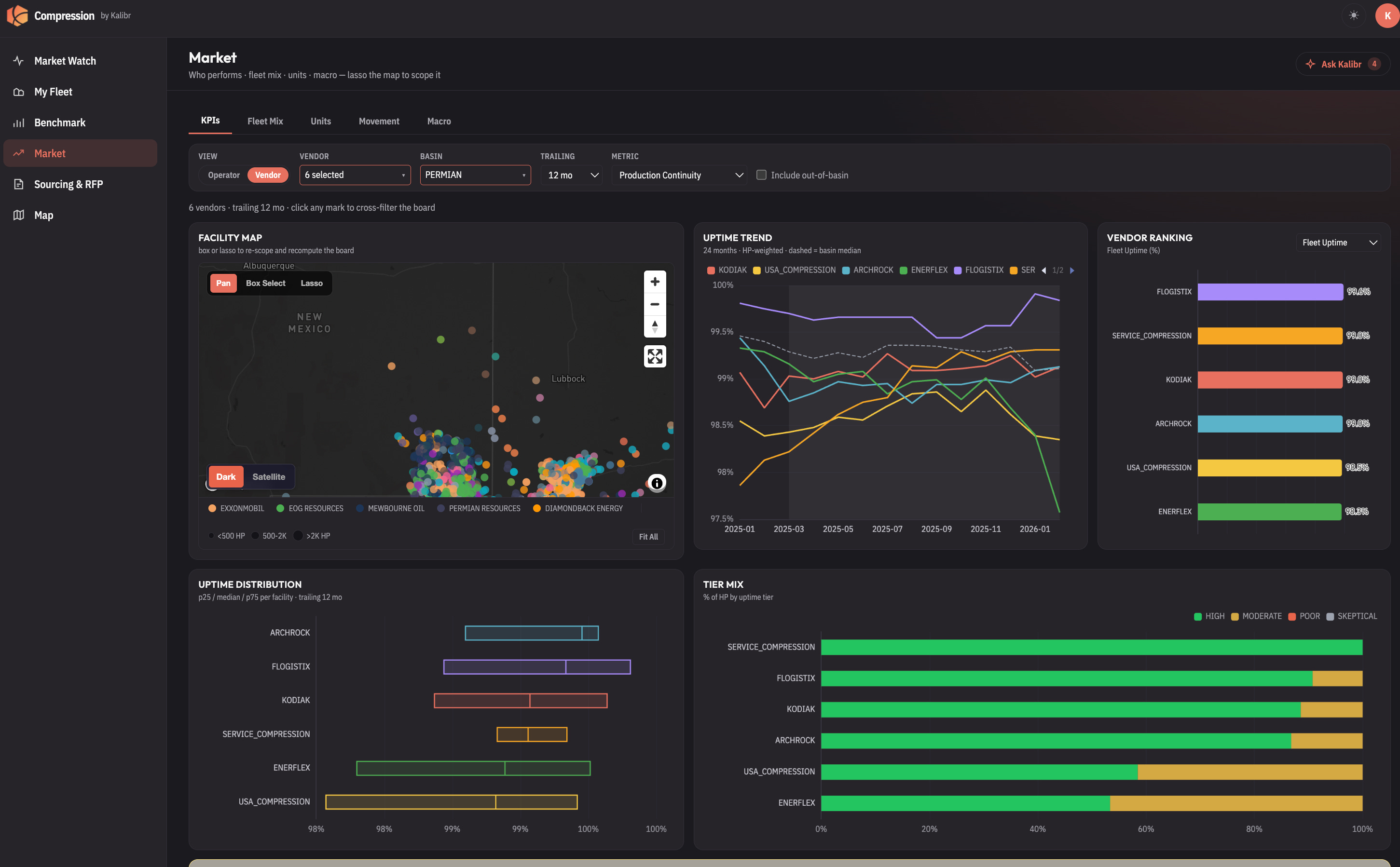
Two operators paying an identical $27.00 are not paying the same price, and a vendor deciding which of the two to fight for knows it to the decimal.
This is the real reason capital-stack literacy belongs on the operating side of the house. The July piece armed the seller with your filings on purpose. The buyer’s half of the lesson is self-knowledge, a phrase I’d apologize for if the vendor’s commercial team weren’t already practicing it on you: they have read your waterfall, your synergy deck, and your uptime tape, decided how hungry you are and how replaceable, and priced the quote against all of it before it reached your inbox. What your balance sheet broadcasts is worth knowing before you negotiate as if it were private.
What the Floor Is Made Of
What sets the vendor’s floor at your particular table is mostly the market’s state, and the three states produce three different animals, only one of which has read the textbook.
In a supply-constrained market the floor barely deserves the name. The vendor’s alternative to your signature is the next operator in line at today’s rate, and the line is real: a fleet running north of 95% utilization re-lets a returned unit in weeks, which makes walking away from you approximately free. Kodiak printed 98.2% for the second quarter, and against that number the zone on rate compresses to a sliver. This is the market we have been living in since the engine queue formed, it is the vintage the 665,000-horsepower agreement was signed into, and it is why the standing advice in these pages has been to negotiate everything except the rate: escalators, guarantees, credits, options, the whole off-book menu.
A balanced market is where the textbook floor lives. I have made the long-form argument that a compression vendor is functionally a REIT: it owns iron at roughly $1,050 per horsepower of equipment cost, finances it, and rents it at a rate that behaves like a yield on book value. The floor assembles from three parts: the operating cost of running the unit, the cost of the capital parked in it, and the return threshold the vendor promised its investors, which across the public compression vendors runs from the mid-teens to the low twenties unlevered. The vendor starts from that threshold and backs into the minimum rate, which is why rates across competitors cluster so tightly, and why a vendor in a balanced market saying he cannot go lower is usually describing arithmetic.
An oversupplied market breaks the cost-plus logic, because an idle unit keeps none of the promises. The capital charge accrues whether the unit bills or not, and holding cost on parked iron is real money: on mid-size compression we model it around $50,000 a month per idle unit once yard, preservation, insurance, and the cost of capital are counted, $600,000 a year for a unit that earns nothing. Against that bleed, any rate above holding cost beats the alternative, and the floor sags from cost-plus-threshold toward whatever stops the bleeding; your zone in that market is the gap between the going rate and that number. The mechanism made a public appearance this month: USA Compression, carrying roughly 497,000 horsepower of delivered-but-not-billing iron, volunteered on its earnings call that the idle set is no longer commanding the price increases the contracted book still gets. And the same physics operates at the single-unit level, all the time, without a press release: the industry’s institutional memory includes units quoted at $25,000 a month when oil sat at $80 and conceded to $20,000 with the operator staring at breakeven, a 20% move that had nothing to do with the vendor’s costs and everything to do with where the deal could land inside a shifted zone.
Your Vendor’s Vendor
There is a second-order term most maps leave out: the vendor’s walk-away against you is capped by his own walk-aways one level up the chain. Everything in the last section assumed the vendor could get iron when he wanted it, and whether he can is itself a negotiation, between him and the engine OEM, between him and the packagers who turn engines into units. He is currently losing it. The 195-week engine queue from earlier in this piece is, translated into this section’s language, a catastrophic vendor BATNA against Caterpillar, and the packaging shops behind the OEM book out nine to twelve months on top. What that does to every table downstream is mechanical. The vendor cannot credibly threaten to replace your legacy unit with a new build, because there isn’t one to be had inside your planning horizon; your alternative of someone else’s new iron is capped even harder, which is much of why the whole market repriced. A supply chain is a stack of zones, and a squeeze at the top narrows every zone below it.
Shop the Book, Not the Unit
The zone also depends on what, exactly, is being shopped. Draw it around a single renewal, the way the calendar usually forces, and it is small and it favors the vendor: a few thousand dollars a month of rate delta on one unit disappears into his quarter, while the mobilization bill for defecting is concrete and yours. Drawn around your year instead, the way oilfield buying cycles, the picture inverts. An aggregated book of renewals, sequenced deliberately and taken to market as one decision, is visible revenue to a vendor’s planning desk, and losing it is the kind of number that gets explained to investors on a call. Vendor BATNA weakens as the horsepower being shopped grows, and it weakens faster than linearly, because replacing one unit is a logistics problem and replacing a book is a strategy problem. The USAC read walked the mechanics, down to the quarter of the fleet sitting month-to-month at any moment; the game-theory point underneath is simply that aggregation is the cheapest BATNA improvement available to a buyer, since it requires no new alternative at all, only assembling the leverage already on the books.
Two refinements sharpen the yearly view. Treat the vendor’s floor as a distribution rather than a point, because you will never know it exactly, and point estimates systematically understate your room. And the aggregation logic refuses to stop at compression: the same annual book exists in frac and in tubulars, watched by different sellers on the same calendar, and a buyer who models demand across the three categories at once is holding correlations no single category reveals. That is why Kalibr maps buying demand across compression, frac, and OCTG together; the leverage math is a portfolio problem, and it prices best at the portfolio level.
Wrong in the Right Direction
The objection that greets this framework, every time it is presented, is accuracy: you will never know the vendor’s floor exactly, so why trust a model built on an estimate of it? Because the two ways of being wrong are nowhere near symmetric, and the asymmetry is the framework’s best feature. I wrote in February about where AI belongs in this industry, and the key takeaway of that piece was error structure. A drilling model pays for both failure modes: trip pipe on a false alarm and you have bought a Type I error, a false positive, priced in rig days; hold the bit on a warning that was real and the Type II error, the false negative, prices in a fishing job or a lost hole. (You can forget which numeral is which; the bills are the taxonomy.) Both bills are large, both feedback loops are slow, and a model that must thread that needle is a hard model to trust.
A BATNA model is a one-tailed bet. Overestimate your hand and the failure announces itself immediately and cheaply: the vendor says no. You bump against the market, you learn where the wall stands, and you fall back to the floor you should have built anyway, the should-cost model. The fallback forks productively. If the gap between should-cost and the market is wide enough, you have an insourcing case to price, and the payback from earlier in this piece (6 to 7 years fully loaded) explains why that calculation is a negotiating asset for nearly everyone and an actual purchase order for nearly no one. If the gap is narrow, you carry the analysis to management and defend, model in hand, why this line cannot go lower this cycle, which is a career-building conversation to get to have. The error nobody invoices you for, underestimating your hand, is the expensive one: it compounds silently, renewal after renewal, and it is the industry’s default setting. So the model has one tail to protect, and directional accuracy is enough to protect it. In the training room the whole section compresses to a sentence: you want to be wrong in the right direction.
The Picture Moves
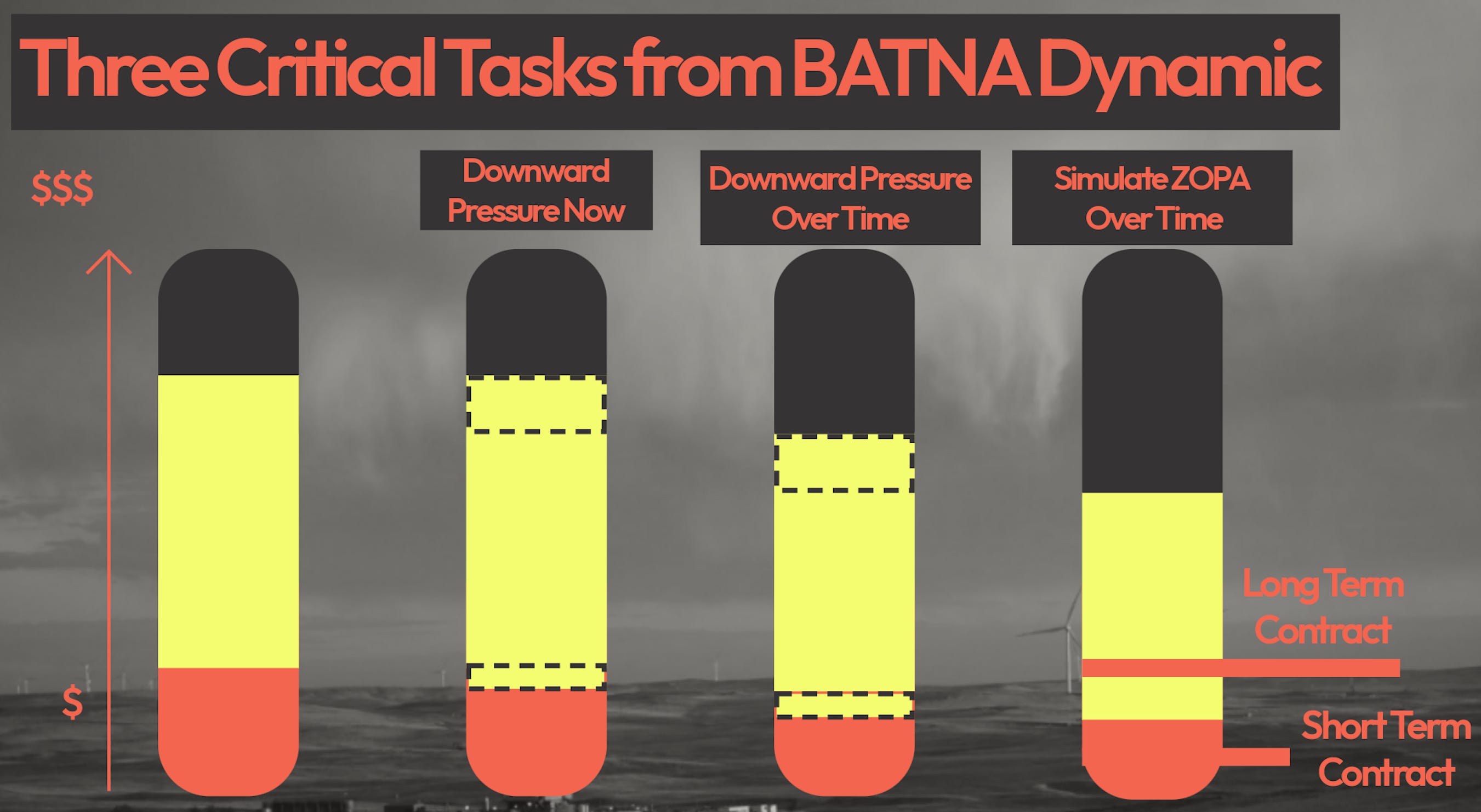
One more caveat. Every picture in this section was a snapshot. Both walk-aways drift: utilization prints move quarterly, queues stretch and shorten, oil holds $80 or doesn’t, fund clocks run down, and each of those relocates a floor or a ceiling. The zone drawn today and again in eighteen months is not the same object twice. That reframes contract length entirely. A term contract is a bet on the zone’s trajectory: locking long at today’s rate is the right trade when the vendor’s alternatives are strengthening beneath you, and the wrong one when his floor is about to sag under idle iron, and the difference between those two worlds is worth more than any concession inside either of them. The Archrock agreement reads differently through that lens. Eight years, record vintage, Caterpillar quoting 195 weeks: whether that was the right line to stand on depends on where utilization, the queue, and the customer’s alternatives sit in years three through eight, and every one of those inputs is an observable with a forward market, a published schedule, or a filing attached, which makes the question modelable. Both walk-aways, written as functions of the indices that move them, run forward against the curves, the same machinery your desk already points at the revenue line. The rest of this piece sketches that machine, starting with the intuition, easiest to see in a business that prices aging athletes for a living.
The League That Prices the Curve
The NFL writes two kinds of contracts, and it prices them off opposite trajectories. The young quarterback coming off his rookie deal gets locked up early, for as many years as his agent will tolerate, at a number that looks obscene at the press conference and like a discount by year three. The Chargers extended Justin Herbert in July 2023 for five years and $262.5 million with two seasons still left on the contract they already held; they paid two years early on purpose, because every month of waiting repriced him upward. His alternatives were compounding, so the club bought the whole curve at the price of the snapshot. The aging running back gets the opposite paper. Derrick Henry, the most productive back of his generation, signed in Baltimore at thirty for two years and $16 million, and the structure is the market’s forecast, no insult to Henry in it, that a thirty-two-year-old’s alternatives will be cheaper to buy at the re-up than to insure today. Same league, same cap, opposite paper, and the variable choosing between them is where each man’s options are headed.
Nobody inside a front office treats those trajectories as unknowable. Teams employ departments to model aging curves, and the argument in the building is about the shape of the curve, never about whether fitting one is possible. I put this comparison up in negotiation trainings and the football fans are nodding before I finish the slide. Then I propose running the same forecast on a compression fleet or a frac calendar, and the room informs me that projecting a counterparty’s future position is speculative. I have learned to enjoy that objection, because it is always delivered by people whose industry invented the type curve: a probabilistic best guess about thirty years of a well’s life, stamped by an engineer, lent against by a bank, and treated as bedrock. A profession this comfortable forecasting fluid flow through rock it will never see can handle a two-year view of a vendor’s order book.
The Census Comes First
A forecast needs a level to start from, which is the unglamorous reason we census this market instead of sampling it. People ask, reasonably, why it matters to have every compression facility in a basin mapped: who runs which iron on whose pad, for which operator, at what performance. Section 3 is the answer. Every claim in it was a computation over that map: the vendor’s ranked list of other tables is a filter on it, and the uptime dispersion that never appears on a rate card is one of its columns. Hold the census and the two walk-aways in any single negotiation stop being estimates and become lookups. The lookup runs from either chair, the part that surprises people: the same map that tells an operator how badly a vendor needs this renewal tells a vendor which operator’s alternatives are thinnest, and the toggle between those two readings is a button, one I have watched both sides push.
But the map is a photograph, dated the day it renders, and every mechanism in section 3 that sets a zone’s width (utilization, idle iron, the queue) is a moving part. A model needs the photograph and then it needs the film. The film comes from two reels: the geology on the demand side, and the foundries on the supply side.
The Demand Side, Written Forward
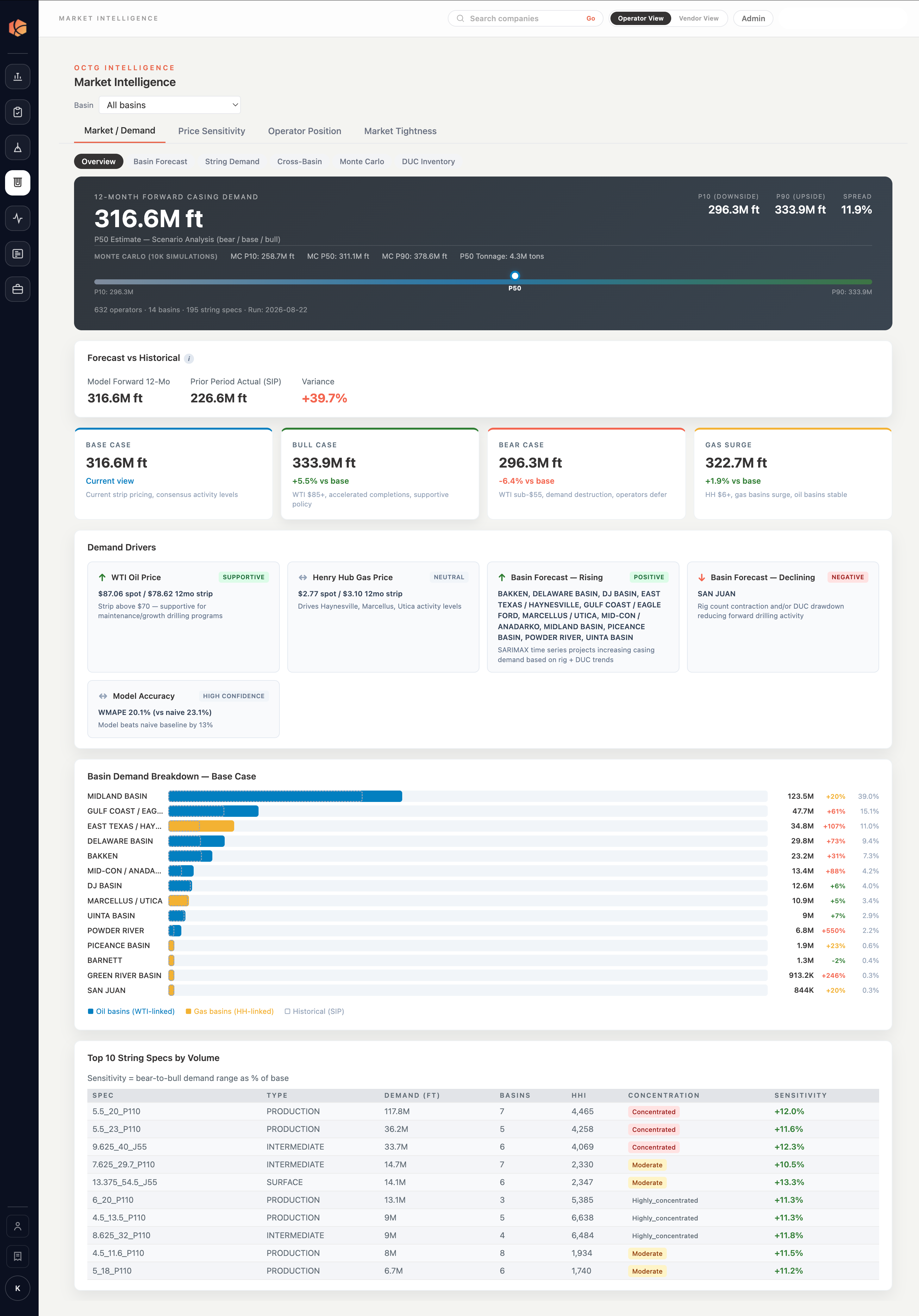
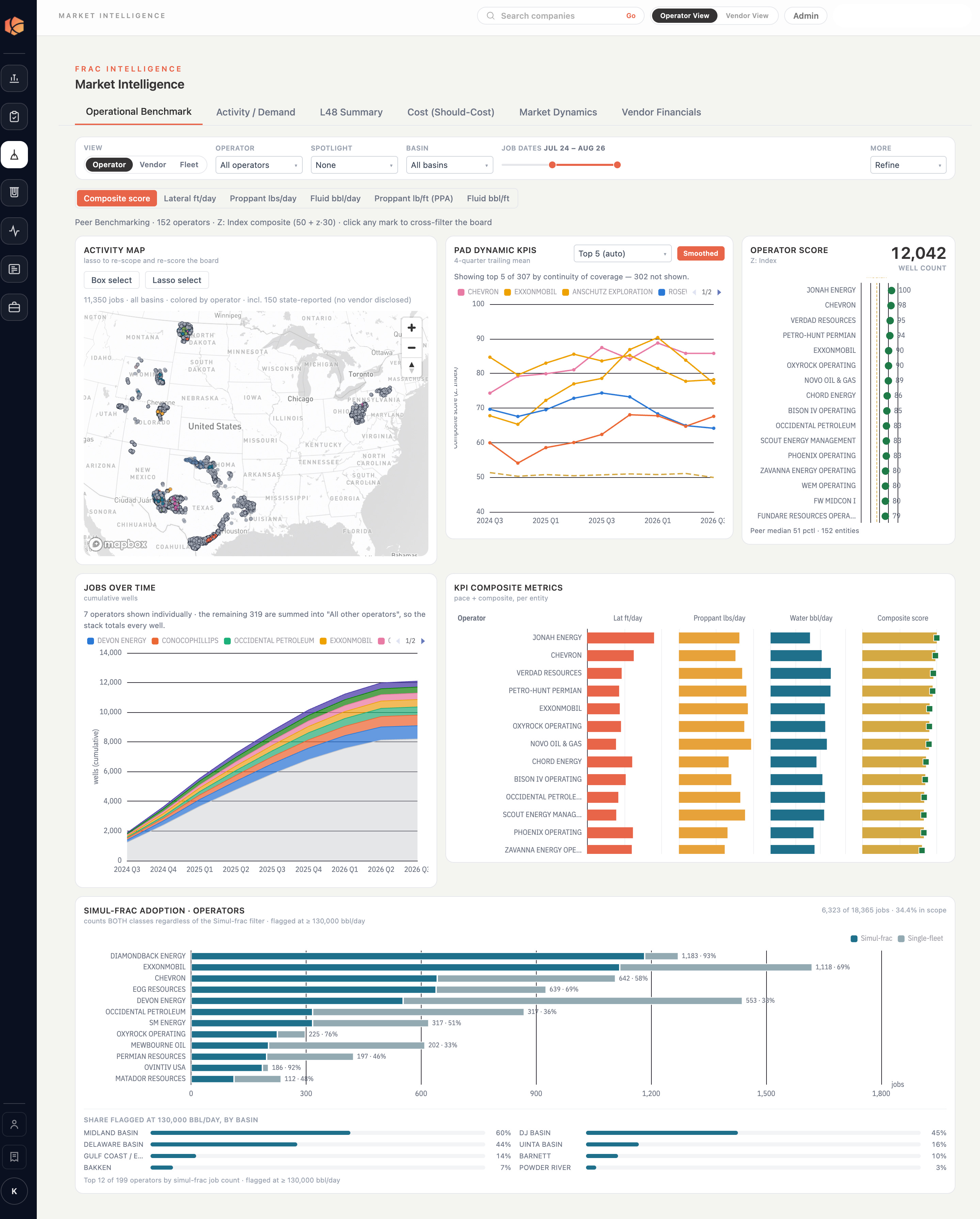
The operator half of the film starts with how fast this industry sets pipe. Call it set velocity: the pace at which casing strings go into the ground and completions come in behind them, which we measure directly rather than infer from rig counts. The casing model runs 632 operators across 14 basins and puts twelve-month forward demand at 316.6 million feet at the midpoint of ten thousand simulations; the frac board is following 11,350 jobs across the same footprint as I write this. Together they are the arrival rate of new wells, and arrivals are where a horsepower forecast begins, because a well that takes a production string this quarter is a compression customer into the 2040s.
Arrivals then land on two objects you already trust, because your own planning runs on them: inventory and the type curve. Inventory duration governs how long today’s arrival rate can hold and where it migrates as core acreage thins. The type curve says what each arrival does next, and what it does next is decline, the mechanism this whole half runs on: pressure falls with age, and a well losing pressure needs progressively more mechanical help moving its own product.
Falling pressure does a second thing, and it is the reason horsepower demand can grow through a flat oil tape: older rock gives up more gas per barrel. Archrock’s investor materials chart the average Permian gas-oil ratio at 3.2 in 2014 and 4.6 as of this summer, and USA Compression told investors in February that Permian gas volumes grew 9% year over year against flattening crude. Tiring wells convert to gas lift, which consumes horsepower on both legs of the loop, and gas lift now runs about 30% of Archrock’s operating fleet. Jefferies puts the compression intensity of associated gas at more than three times that of a dry-gas stream, staged from wellhead gathering to the residue line. The EIA expects another 1.0 Bcf/d of Permian gas growth in 2026 on top of 1.6 Bcf/d in 2025, and the rig count did not have to move for either number.
So the demand half writes forward cleanly, a suspicious sentence for a forecaster to type and one I will stand behind: set velocity gives arrivals, inventory duration bounds them, the type curve turns each arrival into a production path, and the gas-oil ratio scales those paths into horsepower. None of the four moves fast enough to surprise a model that watches weekly, which is more than I can say for the supply half.
For Want of a Crankshaft
The vendor’s half is his own supply chain run forward, and it is where I owe you the payoff promised back in section 2: why a data-center campus in Virginia belongs in a compression negotiation in the Permian. Section 3.5 drew the chain at rest, a 195-week queue and packagers booked out past nine months. Set it moving and the whole thing turns on two questions about the OEM at the top: whether Caterpillar can physically build more large engines, and who else is bidding for the ones it builds.
The first question comes down to iron in the least metaphorical sense. Ariel frames and coolers still quote 25-to-30-week lead times, normal by any historical standard, while complete engines book past 2028; that spread isolates the constraint to the engine, and inside the engine to the metallurgy, the block castings and the crankshaft forgings. The United States operates no foundry that casts large engine blocks or heads; every one arrives from Mexico, Brazil, or Europe, a fact the casting-technology firm SinterCast stated flatly on an earnings call last fall. Howmet counts four forging presses above 35,000 tons in the entire country. The worldwide fleet of large forging presses spans roughly 33 facilities, and adding one runs $1.0 to $1.5 billion, two years of feasibility, and a six-to-seven-year qualification before the first production part ships. This is why Caterpillar’s $725 million expansion of its Lafayette, Indiana engine plant aims squarely at blocks and crankshafts, and why no order book, at any size, can conjure new heavy-forging capacity into existence before 2030. Caterpillar told investors in January that the binding question on its production targets is how fast it can bring its external supply base along.
The second question stopped being rhetorical in 2025: Caterpillar’s power generation sales passed $10 billion that year, up more than 30%, and its large reciprocating engine backlog has more than tripled since January 2024. The new customer’s appetite compounds itself: a data-center campus wants 1.5 to 2.0 megawatts of backup for every megawatt of load, duty the 3500 series happens to be built for, and single orders now arrive denominated in gigawatts (one AI campus took 2 gigawatts of G3516 gensets in a single agreement). Caterpillar has gone as far as launching a prime-power variant of the 3500 platform, which means the engines competing with compression for factory slots now include products designed for the competition. The paper is different too: behind-the-meter power agreements run ten to fifteen years, terms compression vendors spent a decade working up the nerve to ask for. Caterpillar says, credibly, that it protects build slots for its long-standing midstream packager accounts. An allocation policy is a real comfort, right up until the customer at the next window is signing fifteen-year terms for gigawatts.
Every number above is a reading on a moving gauge, all of it public. Kodiak’s investor deck charts the quote on a 3600-series inline engine at 53 to 57 weeks in September 2025, 102 to 106 weeks by April, and past 180 weeks by early summer. USA Compression described the same move on its own book as a tripling, from about 50 weeks to about 150, and has placed firm engine orders for 2027, 2028, and a portion of 2029. Archrock’s CEO put the phrase “extreme tightness” on the record with lead times approaching 160 weeks. The relief schedule is just as public: Caterpillar raised its large-engine capacity target from two times to three times the 2024 baseline by 2030, Lafayette commissions in 2027, and Evercore’s dealer checks find Caterpillar, Cummins, and MTU all adding capacity at once with lead times yet to budge. The squeeze binds hardest through 2027, with capacity commissioning on published dates behind it. The queue’s length is the difference between two flows, components in and competing demand out, and both of them print.
Lock the Quarterback, Rent the Running Back
Write it down and the machine fits in a paragraph. The operator’s walk-away is a function of set velocity, inventory duration, the type curve, and the gas-oil ratio. The vendor’s is a function of component supply, competing demand, utilization, and the clocks behind his capital. Every argument of both functions is observable, most print quarterly, and several carry forward curves or published schedules, the Lafayette calendar among them. Run both functions forward and the zone between the walk-aways stops being a picture and becomes a path.
The contracting rule falls out directly, and it is the NFL’s rule. A counterparty whose alternatives are compounding gets locked long at today’s rates; a counterparty whose alternatives are decaying gets signed short, so you are back at the table when the floor sags. The question a term sheet asks is not what the rate should be today; it is which trajectory you are signing into. Eight-year paper at a cycle top is either the Herbert extension or a five-year contract for a thirty-year-old running back, and nothing on the term sheet itself tells you which; the tell lives in the queue’s trajectory, the GOR tape, and the commissioning calendar in Lafayette, Indiana.
Which brings back the 665,000 horsepower. An 8-year base term, record vintage, an engine queue that tripled inside a year: the agreement is a wager on where the vendor’s half of this machine sits in years three through eight, and every input to that wager now has a name. This Sunday, the Counterparty Read runs them: both walk-aways for the Archrock agreement, quantified and pushed forward against the curves. Most of that issue will sit behind the paywall, because it gets into the model itself, and the model is what clients hire us for. The machine may bless eight years signed at the top of a cycle, or bury it, and running it is the only way I know to find out.
This Sunday’s Counterparty Read runs the model on the Archrock agreement: both walk-aways, quantified, pushed forward against the curves. The verdict sits behind the paywall. Paid subscribers get every read.
The widget maker from the top of this piece can have the last word. He mastered decisions under uncertainty against a sealed box, and every morning his desk makes a lock-or-float call on the thing he sells. The same call has been sitting on his cost line the whole time, where the counterparties file quarterly, the queue lengths print, and half the inputs carry forward curves. None of the machinery is exotic; his own staff runs harder models against far worse data before lunch. What I can’t tell you is who staffs that second desk first, the operator who needs it or the vendor who would rather it never exist.