


One day, my grandkids will ask me what it was like when we used to drill for oil. They’ll be riding around in electric Ubers, debating whether to invest in carbon credits or synthetic protein futures, and I’ll tell them: it was a simple business.
We’d assemble an acreage position, drill delineation wells to prove up potential, and convert PUDs (at PV20) into PDPs (at PV10). Once enough reserves were proven, we’d package it up and sell—flipping assets, redeploying capital, and doing it all over again.
It was formulaic. Efficient. Profitable.
Capital was abundant. Growth was the name of the game. Investors were happy to underwrite volume expansion because $150 oil covered up a multitude of sins. Efficiency was optional. “More” was always the right answer.
But every cycle ends. Ours did too.
From Growth Machine to Cash Manager
COVID didn’t invent capital discipline in oil & gas. But it made it non-negotiable. Energy stocks had become unattractive—volatility, ESG headwinds, and decades of mediocre returns pushed capital elsewhere. To stay relevant, the industry pivoted. Dividends and buybacks replaced growth stories as the new signal of value.
Operationally, this shift forced a new mindset. CAPEX became Capital Efficiency. The mandate was clear: spend the least to keep production flat. Margin expansion took center stage. Consolidation became the tool of choice—spreading fixed costs across larger asset footprints.
We weren’t just competing within the Permian anymore. We were competing globally—against basins with fundamentally better economics. The game evolved into a contest of asset and cash management discipline, constrained further by a finite inventory of Tier 1 locations.
Every drilling decision carried not just a capital implication, but an opportunity cost. Drill now at today’s prices, or preserve top-tier inventory for better market conditions? What used to be simple math became a nuanced capital allocation exercise.
The Lever We’ve Ignored: Strategic Sourcing & Contracting
Through all this, we’ve attacked the obvious levers. OPEX reductions through uptime gains and marketing efficiencies. CAPEX improvements through engineering—longer laterals, simul-fracs, tighter cycle times. We measure every fraction of production efficiency because that’s what engineers do. We optimize what we can control.
But there’s one lever—glaring, impactful, and largely untouched—that remains hiding in plain sight:
the way we negotiate and structure the agreements with the service providers who make all this possible.
Oil & gas is, at its core, a subsurface real estate development business. We acquire acreage, plan the build, and rely on third-party contractors for execution. Yet, while we obsess over rig efficiency and frac spread performance, we accept commercial terms with little more than a bid sheet comparison.
We track everything—except the leverage we’re actually holding.
The Disconnect: Operations vs. Supply Chain
This isn’t a failure of talent. Most companies have built capable supply chain teams. The problem is structural. Bid sheets offer clean comparisons but rarely tell the full story. Lowest bid doesn’t always mean lowest cost when uptime, service quality, and safety come into play.
Operations teams live with the consequences of suboptimal contracting. They see the hidden costs in downtime and rework. But without a framework to normalize these performance factors into sourcing decisions, supply chain and operations end up misaligned—speaking different languages while margin bleeds quietly out the side.
The Opportunity: The Margin Lever with the Best Risk Profile
Strategic sourcing and contracting is compelling not just because of its potential impact—but because of its risk profile. We’ve pushed performance gains in drilling and completions. Each incremental improvement comes with more technical and operational risk. Contracting, on the other hand, can amplify existing gains without touching field operations. No new technology. No operational disruption. Just better-structured agreements.
Other industries figured this out long ago. Manufacturing, technology, even tobacco. When growth slows and margins compress, they focus on what they can control:
the terms of their supply chain relationships.
Oil & gas has been late to this realization. But the opportunity is no less real.
Why We Built Kalibr
Kalibr was built to close this gap.
We’ve seen how operational excellence gets undermined by transactional sourcing. Not because people are careless—but because the process to do better simply isn’t there. Our mission is straightforward:
Bring rigor to strategic sourcing.
Align operational priorities with commercial outcomes.
Systematically engineer leverage in a market designed to commoditize us.
This isn’t about being adversarial. It’s about being precise.
It’s applying the same process discipline we already demand in operations—finally extended to the contracts that govern 80% of our spend.
Because while the rock may be finite, leverage is not.
In a business where we can’t control the price of what we sell, we’re left with one mandate:
master how we buy.
That’s the work we’ve built Kalibr to do.
Not as theory. As process. As repeatable advantage.
Over time, we’ve distilled this into a structured framework—ten principles that turn sourcing from a transactional afterthought into a strategic lever for operational and financial performance.
Not soft skills.
Not best practices.
Just structured, engineered leverage.
In short:
The Kalibr Manifesto.
Tenet 1: Negotiation Is an Operational Lever, Not a Soft Skill
For an industry that tracks drilling cycle times to the half-day, uptime to the decimal, and LOE in basis points, oil & gas applies a surprisingly casual rigor to how it negotiates the costs of doing business. Somewhere along the way, “negotiation” got reclassified as a soft skill. The domain of the charismatic—relationship managers, the folks who “know how to get a deal done”—as if charm could consistently deliver margin.
This is a category error. Negotiation, specifically in strategic sourcing, is not a soft skill. It’s a commercial function. Done correctly, it’s the deliberate sequencing of economics, game theory, behavioral science, and marketing principles—applied systematically to improve free cash flow. This isn’t about personality. It’s about process.
In a commodity business, you don’t control the price of what you sell.
Your enduring advantage is simple: produce at a lower cost than your competitors.
That’s it. That’s the game.
We understand this intuitively when it comes to operations. We have KPIs for everything that moves:
Uptime.
Artificial lift run-time.
Drilling efficiency.
LOE reduction.
Even marketing deducts get scrutinized with commercial discipline (see Antero’s playbook).
But when it comes to negotiating the 80% of CAPEX and OPEX that is service-based, we treat it like a procurement task. Transactional. Admin work. Not an operational lever.
The irony is glaring: we apply world-class engineering rigor to production performance, and then accept service pricing structures at face value—so long as the bid sheet has enough columns to make us feel diligent.
Turning Negotiation from Soft Skill to Science
The shift begins with recognizing negotiation for what it is: applied leverage. And like any operational discipline, what we can measure, we can improve.
BATNA analysis (Best Alternative to a Negotiated Agreement) is not an academic exercise. It quantifies your leverage:
What’s your fallback option?
What’s theirs?
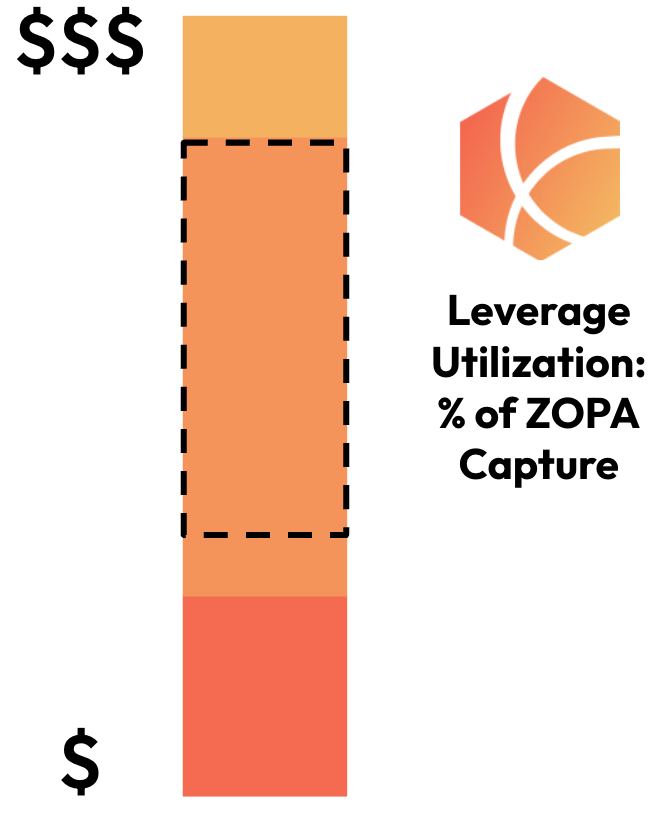
How much of your leverage are you actually capturing?
From this, you can build KPIs as rigorous as any drilling metric:
% of available leverage utilized.
Relative strength against vendor peer groups.
Contract terms optimized to leverage dynamics.
This is not theoretical. It’s commercial execution, measured with operational discipline.
Why Process > Personality
The second reason negotiation must be treated as an operational lever is scale. Personality doesn’t scale. Process does.
Expecting every operations lead to be a sourcing expert is unrealistic. They’re already managing uptime, field performance, production targets, and a dozen other KPIs. Negotiation is one slice of a much larger plate. But give them a structured, efficient process that aligns sourcing with operational outcomes? That’s scalable.
Process is what turns negotiation from a personality-driven exercise into an enterprise-wide competitive advantage.
Other Industries Got There First
Industries that faced this same inflection point—technology, manufacturing, even tobacco—recognized that when growth slows and margins compress, you stop hoping for top-line miracles and start engineering bottom-line leverage. They didn’t treat negotiation as an art. They industrialized it.
Oil & gas has been late to this shift.
But the math applies just the same.
In a business where we don’t control price, and every basis point of free cash flow matters, negotiation isn’t optional.
It’s an operational lever.
One we simply haven’t pulled hard enough.
The Kalibr Way: Engineering Margin Impact
At Kalibr, we approach negotiation the same way we approach cycle times:
Defined processes.
Measurable KPIs.
Feedback loops for continuous improvement.
We align sourcing strategy with operational realities. We normalize Total Cost of Ownership across vendors. We build negotiation processes that scale.
Because when 80% of your CAPEX and OPEX is service-based, treating sourcing as a soft skill is not just suboptimal—it’s self-inflicted margin erosion.
Negotiation is not about being “good with people.”
It’s about engineering better outcomes through structured leverage.
Tenet 2: Market Intelligence — Leverage in Raw Form
There’s an uncomfortable truth in oil & gas: most vendors know your business better than you know theirs. They walk into negotiations armed with real-time intelligence—asset utilization, customer concentration, competitive dynamics, even your own drilling schedules. They know where they’re vulnerable, sure, but they also know where you are predictable. They understand your activity cadence, your procurement patterns, your historical concessions. And they track it with the same rigor you reserve for production KPIs.
Why? Because selling to you is their entire business. Negotiating with you is their job.
For you, it’s one line item on a long list of operational priorities.
This asymmetry isn’t because vendors are smarter. It’s because they’re structured for it. They run CRM systems designed to aggregate every interaction, every data point, every whisper of competitive activity. They strategize in quarters and years. You negotiate in weeks and wells.
The result? They dictate terms while you’re still pulling last year’s bid sheets.
This is not a sourcing problem. It’s an intelligence problem. And more precisely: it’s a market intelligence problem.
Not All Data Is Created Equal
One of the most common mistakes operators make is conflating “market intelligence” with generic benchmarking. They hire consultants for market rate studies, run a few RFPs, and convince themselves they’ve “covered the market.” They haven’t.
Market intelligence isn’t about collecting data. It’s about collecting leverage.
The only intelligence that matters is the information that sharpens your understanding of the other side’s BATNA—their Best Alternative to a Negotiated Agreement. Because every dollar of negotiation value flows from one simple question: what would they do if not you?
Who else would they sell to?
What would it cost them to replace your volume?
How concentrated is their customer base?
Are they facing debt maturities? Exit timelines? Idle fleets?
When you focus intelligence-gathering through this lens, the noise falls away. You’re not benchmarking the market. You’re benchmarking their alternatives.
The Field Knows First — But Do You Listen?
Ironically, some of the best market intelligence already exists inside your organization. It lives with the field teams who see which vendors are stretched thin, who’s missing SLAs, who’s quietly offering backdoor discounts. But because this information isn’t captured in a structured way, it rarely makes it to the people who need it at the negotiating table.
At Kalibr, we treat field intelligence not as tribal knowledge, but as structured input. We layer it with public data—earnings calls, utilization reports, asset-level insights—to build a dynamic map of counterparty strengths and weaknesses. This isn’t academic. It’s an operational tool designed to translate observations into leverage.
The Goal Is Not Perfect Knowledge—It’s a Delta
You don’t need omniscience to win a negotiation. You simply need better information than the other side expects you to have. That informational delta is where leverage lives.
Other industries—automotive, aerospace, tech—have long understood this. They don’t negotiate to “find” the market. They negotiate to shape it. Because they know that every inch of informational advantage translates to dollars of margin.
Oil & gas, with its endless focus on what comes out of the well, has neglected the equally important game of what goes into it. Strategic sourcing, done right, flips that dynamic.
What Kalibr Does Differently
At Kalibr, we operationalize market intelligence as a continuous function—not a project, not a report. We don’t benchmark rates. We benchmark leverage.
We quantify:
Counterparty revenue dependencies.
Competitive pressures in specific basins.
Contract structures that limit their optionality.
Strategic initiatives that shape their next moves.
We build a living map of counterparty BATNAs and use it to systematically sequence negotiations in descending order of leverage.
The field gives us the ground truth.
The data gives us the macro view.
The process aligns it all into actionable intelligence.
This isn’t a procurement task. It’s a commercial strategy.
And when you approach it with the same rigor you apply to drilling and completions, you stop playing by vendor terms and start setting your own.
Market intelligence isn’t a slide deck.
It’s leverage in raw form.
Like Pedro Pascal and emotionally damaged surrogate children, the best stories always come in pairs.
So it feels right that we’ve started this Manifesto with two foundational tenets:
Negotiation as an operational lever, and market intelligence as the first principle of leverage.
One tells you what to do.
The other tells you where you can do it.
In the coming weeks, I’ll walk through the remaining tenets—the structured, systematic process we’ve built at Kalibr to turn sourcing into an engineered margin machine.
Because here’s the reality:
The easy levers are gone.
We’ve optimized drilling.
We’ve squeezed LOE.
We’ve refined capital efficiency to the bone.
Every remaining point of margin comes with escalating technical and operational risk.
Except one.
Strategic sourcing and contracting remains the most underutilized, least structured, yet most controllable lever in oil & gas. It’s not new. But it’s been neglected. And in a commodity business where we can’t set the price of what we sell, this lever—how we buy—is the only one we truly own.
we’ve bet my career on that.
And I believe it’s the key for oil & gas to advance into its next horizon.
The Manifesto continues next week..